
Psychology
Investing Psychology: Five Costly Biases and How to Train Them Out
Most investing mistakes are not about information but about the mind reading it. Five biases, the moments they strike and a way to practise discipline before real kroner are at stake.

Investing psychology explains why sensible people make poor money decisions. The biases that cost investors most are loss aversion, overconfidence, herding, anchoring and the fear of missing out. You cannot switch them off, but you can learn to recognise them in the moment and set rules that act before they do, ideally while practising with nothing real at stake.
In short
- Losses hurt more than equal gains please, so investors hold losers too long and sell winners too early.
- Overconfidence shows up as trading too often, and the busiest traders tend to earn less.
- Herding, anchoring and FOMO all swap your own judgement for someone else’s number or mood.
- Written rules, a short decision journal and practice with play money build discipline before it costs anything.
Why investing psychology matters more than information
Danish investors have never had more data. Live prices from Nasdaq Copenhagen sit in most banking apps, company announcements arrive the moment they are released, and opinions are everywhere. The aktiesparekonto, the share savings account, gave private investors a simple way to invest in shares. Yet the hardest part of investing still happens between the screen and the click.
In 1979 Kahneman and Tversky showed that people judge outcomes as gains and losses from a reference point, not as changes in total wealth, and that losses weigh more. That one finding explains a surprising amount of investor behaviour.
Loss aversion: why do losses hurt more than gains?
Later estimates by Tversky and Kahneman put the ratio at roughly two to one: losing 1,000 kroner feels about as bad as winning 2,000 feels good. In markets this produces the disposition effect. Odean studied thousands of brokerage accounts and found that investors sold winning shares more readily than losing ones, and that the winners they sold went on to do better than the losers they kept.
The trap is arithmetic as much as emotion. Buy at 200 kroner, watch it fall to 150, and you have lost 25%. Getting back to 200 now needs a rise of 33%. Waiting to “get back to what I paid” is a decision to stay invested in that one company, made for the wrong reason.
The counter-question is simple: if you had cash instead of this share today, would you buy it at this price?
Overconfidence: the cost of trading too often
A few good calls feel like skill. Often they are a rising market. Barber and Odean examined tens of thousands of household accounts and found that the households that traded most earned clearly lower net returns than those that traded least. Each trade carried costs, and the extra activity did not add enough skill to cover them.
Overconfidence also hides in hindsight. Once a share has moved, the move looks obvious, and you remember the calls you got right more clearly than the ones you got wrong. The fix is a written record. A one-line note before every trade, read back a month later, is humbling and useful in equal measure.
Herding and FOMO: when the crowd sets your price
Herding means buying because others are buying. It feels safe, since everyone at the fredagsbar owns the same share, but it can push prices beyond what the business is worth and leaves late buyers holding the risk. In a market where a handful of very large companies make up much of the value of Nasdaq Copenhagen, it is easy for everyone to own the same few names for the same reasons.
FOMO, the fear of missing out, is herding with a clock on it. The share has already risen 40% and you buy because it rose, not because you know what it is worth. The tell is urgency: if a decision cannot wait a day, it probably should.
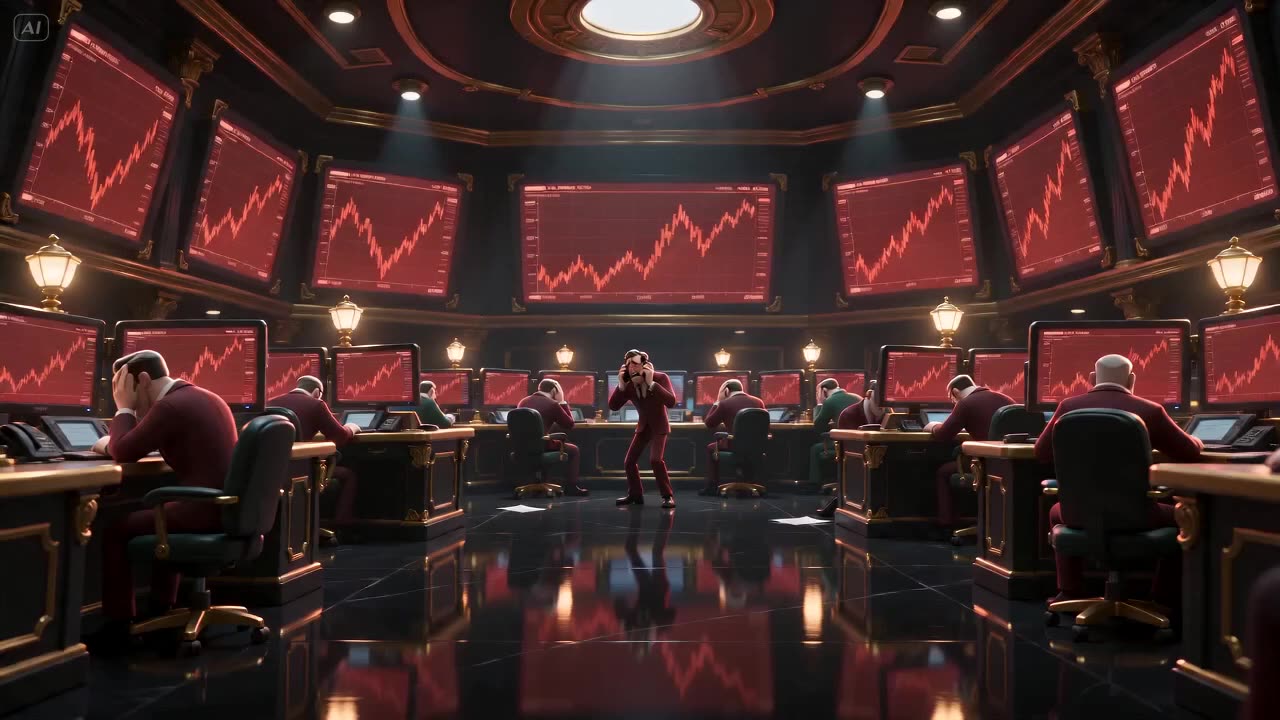
Feel the crowd before you follow it. In WallThrone every player trades the same market at the same time, and big buyers move prices for everyone. Practise holding your nerve when the herd runs.
Test your nerveAnchoring: the number you cannot forget
In a classic experiment, Tversky and Kahneman spun a wheel of fortune in front of participants, then asked them to estimate a quantity that had nothing to do with the wheel. Their answers leaned towards the random number they had just seen. Investors do the same with purchase prices, last year’s high and analysts’ price targets.
“It used to trade at 300” is an anchor, not an analysis. The share is worth what its future earnings justify, given what you know today. Ask what you would pay if you had never seen the chart.
How to spot investing biases in the moment
Biases rarely announce themselves. They speak in phrases you will recognise.
| Bias | What it sounds like | What it costs | Counter-habit |
|---|---|---|---|
| Loss aversion | “I’ll sell when it gets back to what I paid.” | Capital stuck in weak positions | Set an exit rule before you buy |
| Overconfidence | “I’ve called the last three, I can feel this one.” | Too many trades, too much size | Keep a journal and compare with an index |
| Herding | “Everyone I know owns it.” | Buying late, at crowded prices | Write your own reason in one line |
| Anchoring | “It was 300 last year, so it’s cheap.” | Mistaking a fall for value | Value it as if you had no history |
| FOMO | “I have to get in today.” | Buying near short-term peaks | Wait 24 hours before any unplanned buy |
How to train discipline without real money
Reading about biases changes little. You need repetitions under pressure, and they are cheaper with play money. A broker’s demo account, paper trading and simulators all help. WallThrone adds pressure on purpose: prices move every five seconds, news on Ticker TV can move them without warning, and your hired traders can keep working for up to 12 hours while you stay away from the screen. A simple routine:
- Write three rules before you start: the most you will put into one company, when you cut a loss and when you take a profit.
- Note one line for every trade: the reason, and which bias might be behind it.
- When news breaks, wait a full minute before acting. Watch what the price does without you.
- After a winning streak, lower your stake rather than raising it.
- Once a week, list the rules you broke and the bias that broke them.
Play money removes the sting of a real loss, so expect to be braver than you would be with your own kroner. That is a limit of practice, not a reason to skip it. Discipline built early also protects the slow work described in how compound interest grows wealth over time.
Frequently asked questions
What is the most common bias in investing?
Loss aversion is among the best documented. It drives the disposition effect, where investors sell winners too early and hold losers too long, hoping to break even. Overconfidence follows close behind and shows up as frequent trading. Most investors show several biases at once, which is why rules written in advance work better than willpower.
How do I stop panic selling when the market falls?
Decide in advance. Before you buy, write down what would make you sell, so a falling price alone is not the trigger. Checking prices less often also helps: Benartzi and Thaler argued that investors who evaluate their portfolios frequently feel losses more and take less risk than they would choose with a longer view. A plan made while calm beats a decision made in red.
Can a game really train investing psychology?
Partly. A game gives you hundreds of decisions under time pressure, and a journal turns them into patterns you can see. What it cannot copy is the pain of losing your own money, so expect your behaviour to shift when stakes are real. Build the habits with play money, then test them carefully with small amounts.
Does Finanstilsynet give advice on what to invest in?
No. Finanstilsynet, the Danish Financial Supervisory Authority, supervises banks, brokers and investment firms, keeps a register of authorised firms and publishes warnings about unauthorised ones. It does not tell individuals what to buy. For personal questions, use an adviser you have checked, and look up any firm in Finanstilsynet’s register first.
WallThrone is a game: the money is play money, the companies are fictional and it is not a broker. This article is for education only and is not financial advice.